Honest Harold the Homemaker
The Show That Couldn't Escape Its Own Shadow
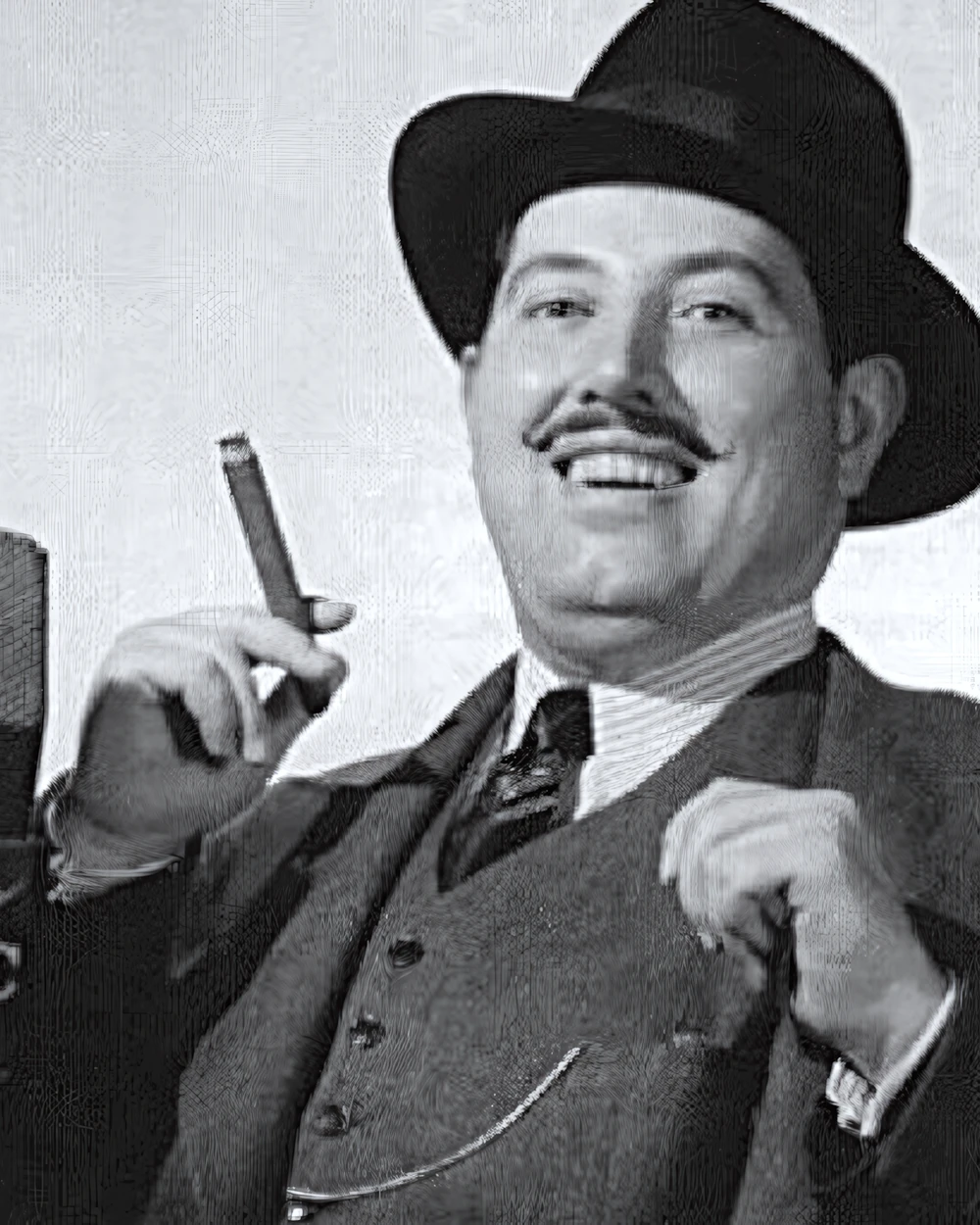
Harold Peary had spent over a decade as Throckmorton P. Gildersleeve, one of radio's most recognizable characters, before walking away in mid-1950. He wanted more creative ownership and more room to use his singing voice. NBC and Kraft — which owned the Gildersleeve property outright — wouldn't budge on either point. CBS came calling with a seven-year contract and, reportedly, better terms. So Peary made the jump. The result was Honest Harold the Homemaker, a comedy that premiered on CBS on September 17, 1950, and ran for a single season before going off the air on June 13, 1951.
The problem, which became obvious quickly and was widely discussed at the time, was that the new show sounded a great deal like the old one. Media critic John Crosby, writing on March 1, 1951, called the arrangement "an unqualified disaster both for the network and Mr. Peary." A Radio Life review dismissed it as "derivative, unexciting, and, in the end, just another show." The show never found an audience, ran without a commercial sponsor for most of its run, and ended after 38 episodes. And yet, for anyone who actually listens to those episodes, the story turns out to be more complicated than the critical verdict suggests.
Harold Hemp and the Town of Melrose Springs
The central character was "Honest" Harold Hemp, a popular radio entertainer in the fictional town of Melrose Springs who hosted an in-universe program called The Happy Homemaker. Harold lived with his mother and his nephew Marvin, pined after more than one woman simultaneously, and generally found himself in the kind of domestic comic trouble that had made situation comedy a radio staple for years. The show opened every episode with a burst of the famous "dirty laugh" Peary had made synonymous with Gildersleeve — reportedly born in 1939 when he produced the giggle offhand at a personal appearance and an audience latched onto it. It closed with Peary delivering background dialogue over the credits, a practice lifted directly from the Gildersleeve format.
The supporting cast was arranged in ways that felt familiar. Harold's friend Pete was a marshal, an echo of Gildersleeve's law-enforcement buddy. The town veterinarian, Doc "Yak-Yak" Yancy, was described as combining the crustiness of Gildersleeve's Judge Hooker with the nasal whine of drugstore owner Mr. Peavey. Harold's girlfriend Gloria — played by Peary's real-life wife Gloria Holliday — worked as a PBX operator at the radio station, a role that tracked closely with Bessie, the Water Department secretary from the earlier show. Shirley Mitchell, who had played the recurring Gildersleeve love interest Leila Ransom, turned up here as Florabelle Breckenridge, filling essentially the same function. The show even borrowed specific Gildersleeve plot devices: Harold runs for mayor in one storyline; in another, he finds himself simultaneously engaged to two women.
Critics who heard this as recycling were not wrong. But the writing team — Peary himself, Gene Stone, Bill Danch, and Jack Robinson — produced material that, by any honest account of the surviving recordings, was frequently funny and populated with well-drawn characters. The show's failure had more to do with context than craft.
The Cast
Peary played Harold Hemp with the full complement of his skills, singing frequently and deploying the physical energy that had always characterized his radio performance. Kathryn Card played Mother Hemp in the early episodes; Jane Morgan took over the role later in the run. Young Sammy Ogg played nephew Marvin. Bob LeMond handled announcing duties, and Jack Meakin provided the music.
Joseph Kearns brought Doc "Yak-Yak" Yancy to life. Born in Salt Lake City on February 12, 1907, Kearns had built a substantial radio career through the 1930s and 1940s — serving as the host "The Man in Black" on Suspense, appearing regularly on Jack Benny, Burns and Allen, and The Adventures of Sam Spade, and accumulating credits across virtually every major CBS program. He is best remembered now as the original Mr. Wilson on the CBS television series Dennis the Menace, a role he held from 1959 until his death from a cerebral hemorrhage on February 17, 1962. He had also voiced the Doorknob in Disney's Alice in Wonderland in 1951, the same year Honest Harold was on the air.
Mary Jane Croft played Evelina, one of Harold's girlfriends. Born in Muncie, Indiana, on February 15, 1916, Croft started in radio at WLW in Cincinnati and moved to Los Angeles in 1939. She had actually played Leila Ransom on The Great Gildersleeve in 1950 before Peary left the show — making her one of several cast members with direct Gildersleeve connections. She went on to become closely associated with Lucille Ball, playing Betty Ramsey in I Love Lucy and appearing as a long-running co-star on The Lucy Show and Here's Lucy.
Parley Baer played Pete the marshal. Born in Salt Lake City on August 5, 1914, Baer studied drama at the University of Utah, worked at Utah's KSL before the war, and served as a captain in the Army Air Corps — earning seven battle stars. He had a six-decade career spanning more than 60 films, roughly 1,600 television appearances, and an estimated 15,000 radio programs. On Honest Harold he was still in the early stages of a working relationship with director Norman Macdonnell that would carry through several more productions. He is best known as Chester Proudfoot, the original Chester on CBS Radio's Gunsmoke — a role he reportedly ad-libbed the character's full name for during the run.
The Direction and the People Behind It
Norman Macdonnell directed Honest Harold the Homemaker. Born in California on November 8, 1916, Macdonnell served in World War II including the D-Day landings at Normandy, and joined CBS Radio as an assistant director in 1946. Before taking on this show he had directed episodes of Escape and The Adventures of Philip Marlowe, and had founded a career-training program for CBS called the Columbia Radio Players. Directing Honest Harold was a detour in what turned out to be a significant career: within about a year of the show's cancellation, Macdonnell co-created Gunsmoke with writer John Meston. That series premiered on CBS Radio on April 26, 1952, then moved to CBS Television in 1955 and ran until 1975. Macdonnell also went on to direct Fort Laramie, Rogers of the Gazette, and the radio version of Have Gun – Will Travel, and served as executive producer of the television Western The Virginian.
That combination — Macdonnell directing, Baer in the cast — means Honest Harold sits in a production lineage that eventually produced some of the most significant dramatic radio of the 1950s. At the time, it just meant that a comedy with a troubled premise had a technically capable team behind it.
Why It Didn't Work — And What It Got Right
The broader situation was hard to overcome. Peary's move to CBS came partly as a result of the network's aggressive talent raids on NBC between 1948 and 1950, when CBS was luring stars with better contract terms and favorable tax arrangements. Peary had negotiated with MCA for a bigger ownership stake in Gildersleeve and more room to sing, and when both NBC and Kraft refused, he signed with CBS. Kraft kept the property and simply replaced Peary with Willard Waterman, who had known Peary from their overlapping radio days in Chicago and whose voice was similar enough that listeners adjusted quickly. Notably, Waterman declined to appropriate the famous dirty laugh, feeling it belonged to Peary — and Peary approved of that decision. Critics agreed Waterman made an excellent Gildersleeve, which left Peary in the awkward position of having surrendered a role that continued to thrive without him.
Launching a show on a rival network with a Gildersleeve-shaped character, the Gildersleeve laugh, Gildersleeve plot structures, and several Gildersleeve supporting players was always going to invite unfavorable comparison. Critics felt Peary was clinging to elements he had professed to be bored with, and audiences who wanted Gildersleeve could still get Gildersleeve on NBC. The show ran without commercial sponsorship through most of its run — a few of the final episodes were sponsored by the U.S. Armed Forces, but that was the extent of it. An unsupported show that started Sundays at 7:30, then shifted to Wednesdays at 9 after only two weeks, had little room to find its footing.
What the recordings actually reveal is a show with real comedic writing and a cast that knew what it was doing. The characters were distinct, the timing was sharp, and Peary sang well. Whether that was enough to deserve a longer run is a separate question from whether it deserved the dismissal it received.
Harold Peary After the Cancellation
On March 21, 1951, while the show was still on the air, California Governor Earl Warren appeared on a live broadcast to honor Peary with a special award for completing his ten-thousandth radio broadcast — described as the only such recognition ever issued for that particular milestone. It was a notable moment in a difficult season.
After Honest Harold ended, Peary moved mainly into television and voice work. He played Herb Woodley in the TV version of Blondie, returned to Wistful Vista as Mayor LaTrivia in the television Fibber McGee and Molly, and did voice work for Hanna-Barbera and Rankin-Bass. In the mid-1950s he spent time as a disc jockey at WMGM in New York City, hosting a one-hour program Monday through Saturday. He died on March 30, 1985, in Torrance, California. He has two stars on the Hollywood Walk of Fame — one at 1639 Vine Street for radio, one at 1719 Vine Street for television.
Honest Harold the Homemaker ran 38 episodes in one season. It is a curiosity in the careers of nearly everyone involved: the show that preceded Macdonnell's best work, an early Baer-Macdonnell collaboration, and the CBS experiment Harold Peary couldn't quite make into something new.